AMR & AGV / Industrial material handling

AMR & AGV Solutions for Smarter Material Movement

Move materials between workstations, production areas and storage locations with mobile automation solutions designed around your facility and workflow.

SK Robotics offers a range of autonomous mobile robots (AMRs), automated guided vehicles (AGVs), and autonomous forklifts for industrial material handling applications. Our approach starts with understanding what you need to move, the load requirements, your facility layout and how materials flow through your operation.

Explore AMR/AGV Solutions Discuss Your Application
SK Robotics LiDAR Series autonomous mobile robot Mobile automation / Designed around your workflow
Autonomous mobile robots Automated guided vehicles Autonomous forklifts

Find the Right AMR or AGV for Your Application

No two material handling workflows are exactly alike. The right mobile automation solution depends on the load, route, pickup and delivery points, operating environment, and level of integration required.

Explore the SK Robotics solution categories to identify the technology that best fits your application.

LiDAR Series — Autonomous Mobile Robots

LiDAR Series robot

Explore mobile robots that use LiDAR-based navigation for suitable material transport applications. Depending on the model and configuration, these robots can support movement between designated points in a manufacturing or logistics environment.

Explore the LiDAR Series

Guided Series — Automated Guided Vehicles

Guided Series robot

Discover guided vehicles designed for material transport along defined routes. Guidance method, route layout, and vehicle configuration should be selected according to the facility and process requirements.

Explore the Guided Series

Autonomous Forklift Series — Automated Pallet Handling

Autonomous Forklift Series robot

Explore autonomous forklift solutions for appropriate pallet transport and lifting applications. Model selection depends on load weight, pallet dimensions, lift height, aisle conditions, and operating environment.

Explore Autonomous Forklifts

AMR vs. AGV — What Is the Difference?

AMRs and AGVs both automate the movement of materials, but their navigation approaches and operating requirements can differ.

Autonomous Mobile Robots (AMRs)

AMRs commonly use onboard sensors, mapping, and environmental information to navigate their operating area. They can be suitable for applications where route flexibility and adaptation to the environment are important, depending on the robot's capabilities and deployment design.

Automated Guided Vehicles (AGVs)

AGVs commonly follow defined routes using a specified guidance method. They can be suitable for repeatable transport workflows where routes and operating conditions are well established.

Which Solution Should You Choose?

Start with your application rather than choosing a robot by name alone. Consider:

  • What material needs to be moved, and how heavy is it?
  • Does the process involve pallets, carts, trolleys, or individual loads?
  • Are routes fixed or likely to change?
  • What are the facility's aisle widths, floor conditions, and traffic patterns?
  • Does the system need to exchange tasks or data with existing software?

SK Robotics can help evaluate these requirements and identify an appropriate solution for your application.

Industrial Applications for AMR and AGV Systems

Mobile automation can support a range of internal material movement tasks when the robot, payload handling equipment and workflow are appropriately configured.

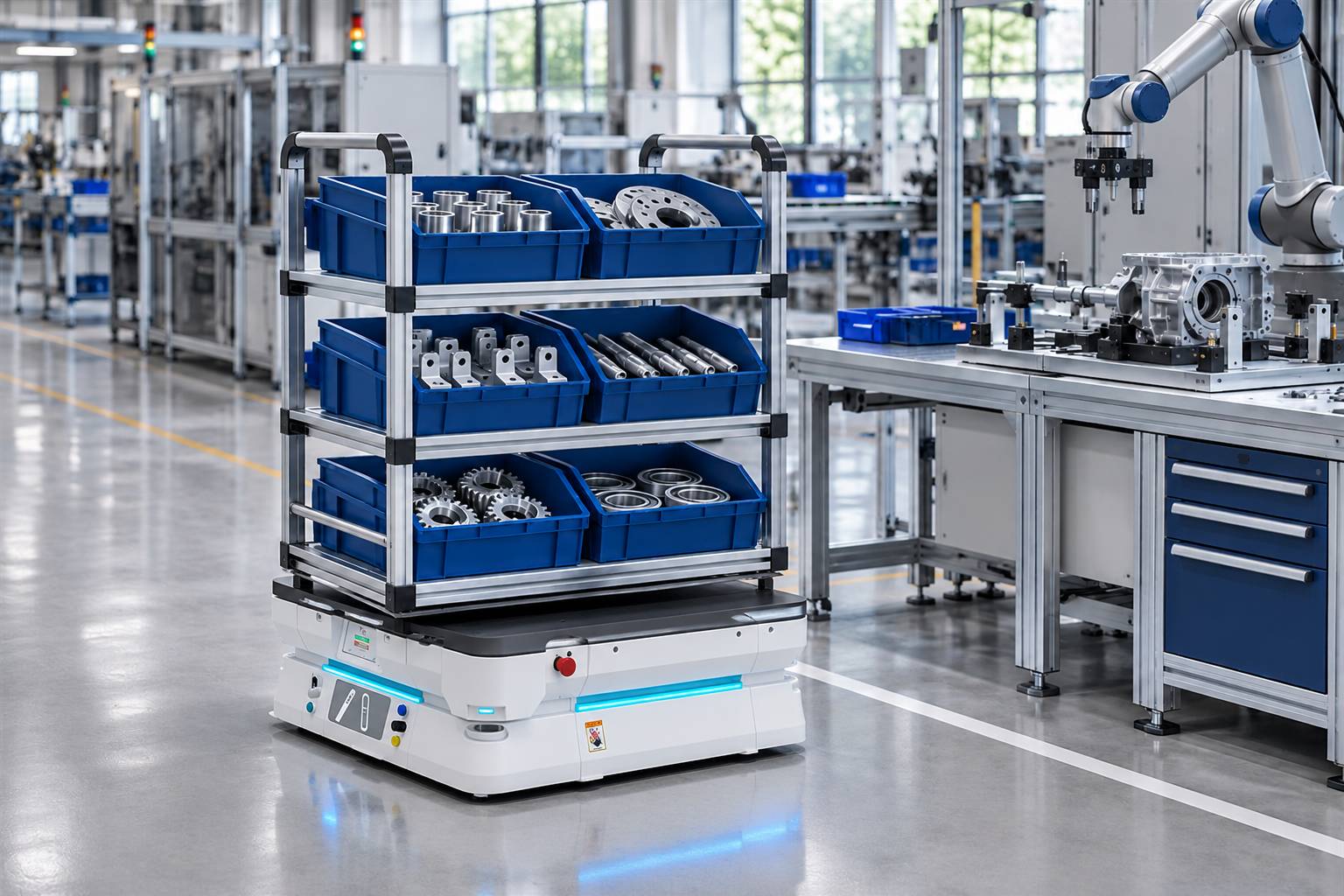
Autonomous mobile robot delivering component bins to a manufacturing workstation

Manufacturing Line Supply

Move components and materials between designated supply points and production workstations.

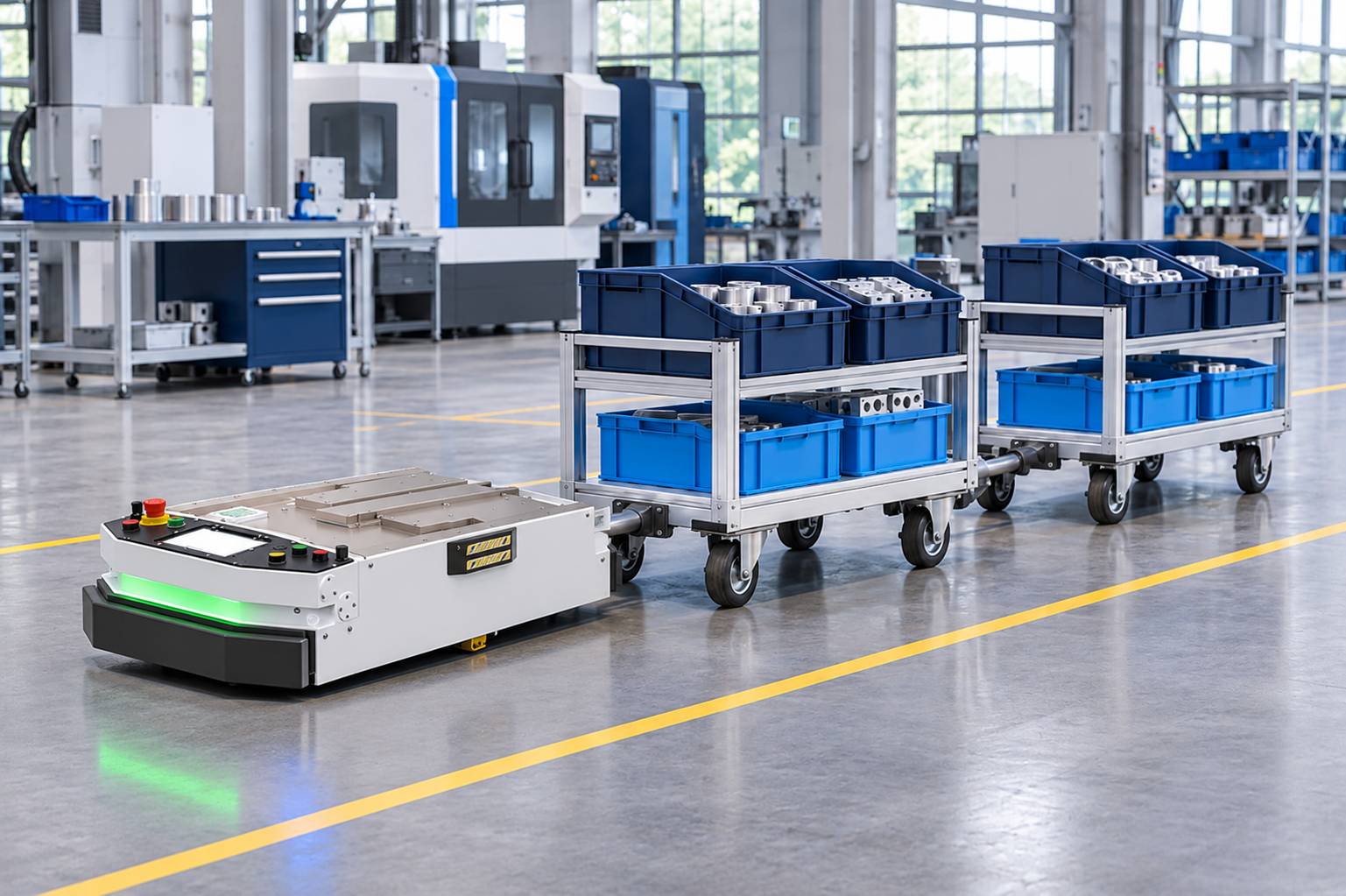
Autonomous tug towing material carts through a factory aisle

Trolley and Cart Transport

Automate suitable towing or trolley movement tasks to reduce repetitive manual transport.

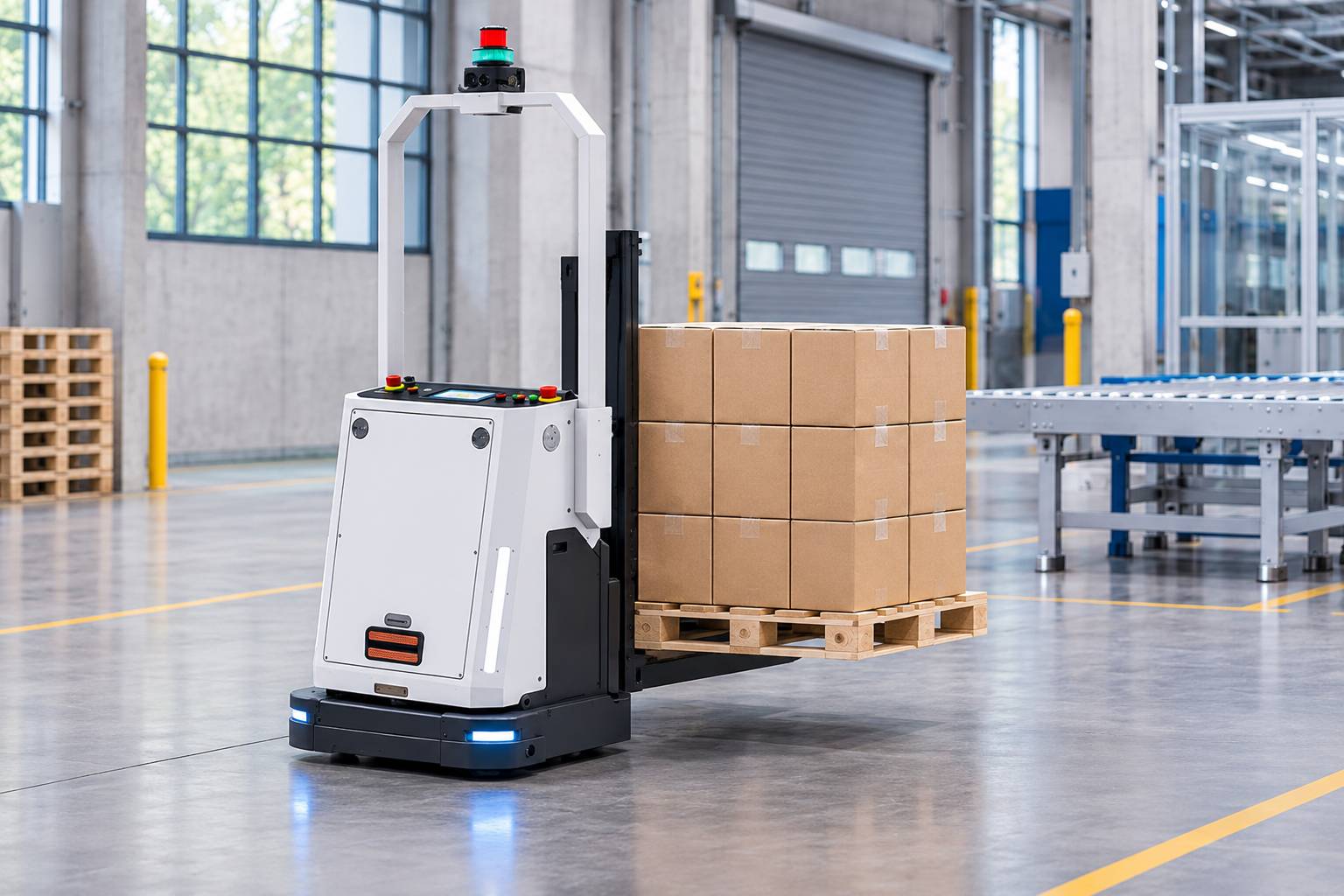
Autonomous forklift transporting a pallet of boxes in an industrial staging area

Pallet Transport and Handling

Support pallet movement with a vehicle designed for the required load, lifting height and operating environment.

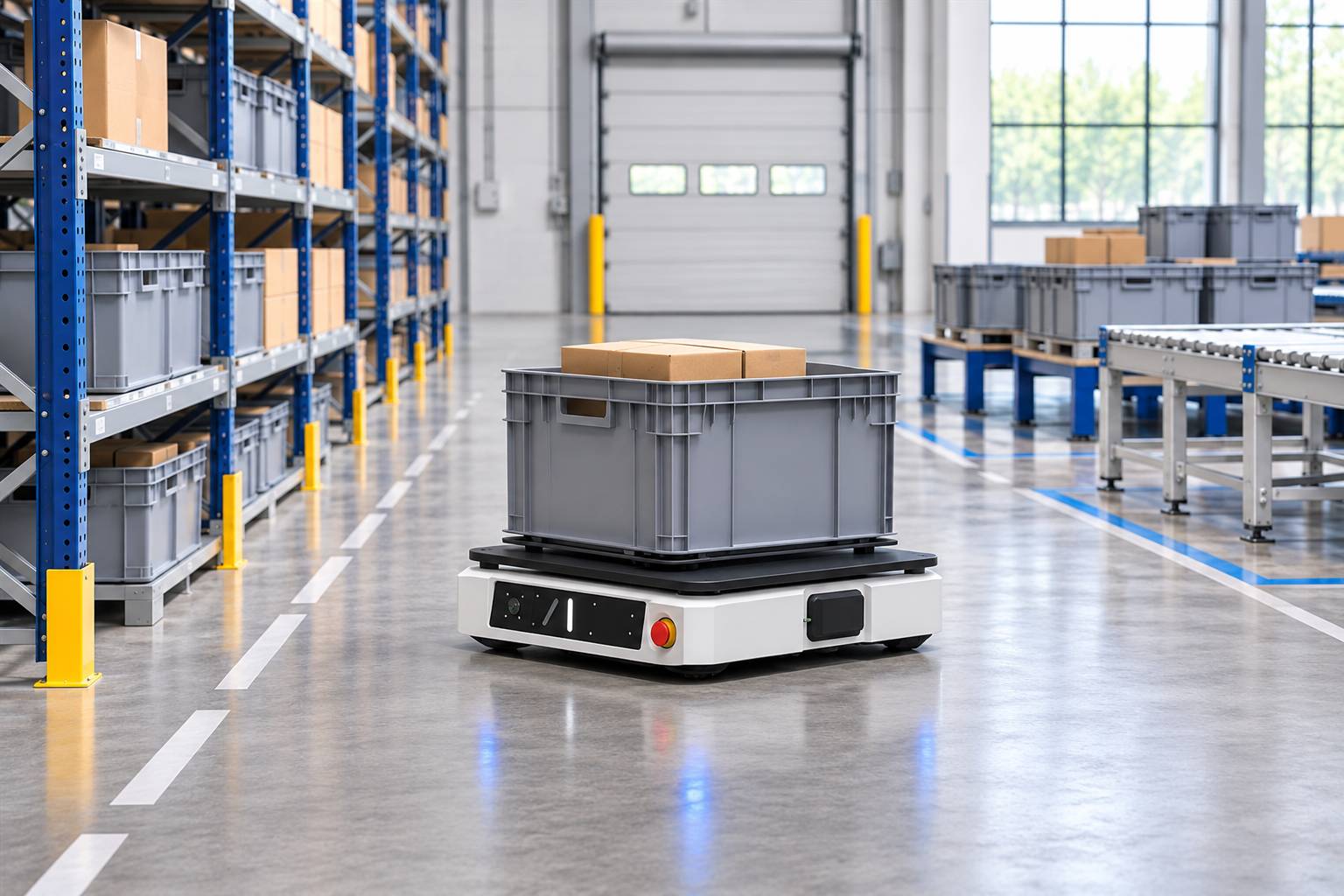
Autonomous mobile robot carrying a tote between warehouse storage and dispatch areas

Warehouse and Intralogistics Movement

Connect appropriate storage, staging, production, and dispatch locations through planned material transport workflows.

Integrated Mobile Automation from SK Robotics

Successful mobile automation involves more than selecting a vehicle. Navigation, task execution, traffic management, safety requirements, and connections with existing operations all need to be considered.

SK Robotics combines mobile robot solutions with application-focused integration to help align automation with your facility's requirements.

Navigation and Task Programming with NavWiz

NavWiz supports navigation-related capabilities, mapping, and task programming within the SK Robotics ecosystem.

Explore NavWiz

Fleet Coordination with DFleet

DFleet supports fleet management capabilities such as task dispatch, traffic control, and system integration for multi-robot environments.

Explore DFleet

Robotics & Automation, Integrated Your Way

Why Work with SK Robotics?

SK Robotics approaches mobile automation as an application and integration challenge, not simply a product purchase. The goal is to identify a solution that aligns with your material movement requirements, facility conditions, and wider operational workflow.

Whether you are exploring autonomous mobile robots, guided vehicles or automated forklifts, start with the process you want to improve.

Frequently Asked Questions About AMR and AGV Solutions

What is the difference between an AMR and an AGV?

An AMR typically uses onboard sensing, mapping, and environmental information to navigate, while an AGV commonly follows a defined route using a specified guidance method. The exact capabilities depend on the model and configuration.

Where are AMR and AGV systems used?

They can be used for suitable material movement tasks in manufacturing facilities, warehouses, and other industrial environments. Applications may include production line supply, trolley transport, pallet movement, and transfers between designated locations.

How do I choose the right AMR or AGV?

Start by assessing payload, load dimensions, travel distance, route layout, floor conditions, traffic, cycle frequency, and integration requirements. These details help determine which vehicle category and configuration may be suitable.

Can AMRs and AGVs handle heavy loads?

Some models are designed for substantial payloads, while others are intended for lighter loads or different handling tasks. Always check the specific model's rated payload and operating requirements before selecting a solution.

Can mobile robots integrate with existing factory systems?

Integration depends on the robot, control software, and existing systems. Requirements may include task dispatch, fleet coordination, warehouse or manufacturing software connections, and interfaces with other equipment. Confirm compatibility during application assessment.

Do AMRs require fixed guide paths?

Not all AMRs require fixed physical guide paths. Many use mapping and sensor-based navigation, while some AGVs use defined guidance methods. The navigation approach depends on the specific product and deployment.

What information should I provide when requesting an AMR/AGV consultation?

Provide the material type, load weight and dimensions, pickup and delivery locations, expected movement frequency, facility layout and any existing software or equipment integration requirements. If these details are not yet available, an initial discussion can help establish what needs to be assessed.

Ready to Evaluate Mobile Automation for Your Facility?

Tell us what you need to move, where it needs to go and what your current workflow looks like. SK Robotics can help you assess the requirements and explore suitable AMR, AGV or autonomous forklift options.

Get Started

OUR EXPERT TEAMS WILL REACH
OUT TO YOU IN NO TIME

Request a Free Custom Quote