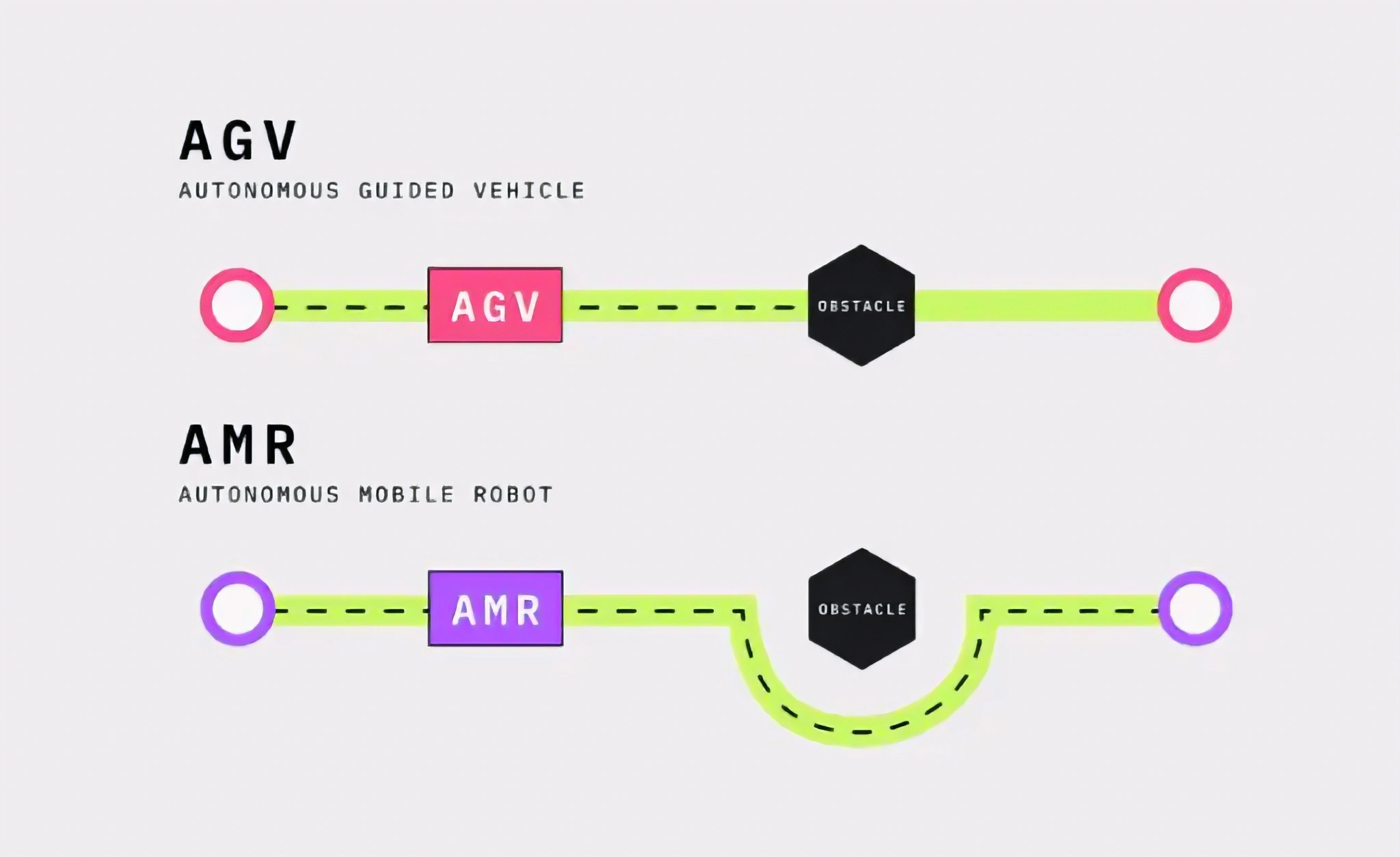
Mobile robots have been moving materials through factories and warehouses for decades, but not all mobile automation works the same way. Two of the most common solutions you’ll hear about are AGVs (Automated Guided Vehicles) and AMRs (Autonomous Mobile Robots). While they have similar purposes, how they operate and where they operate is very different.
At SK Robotics, we provide both to help manufacturers choose the right solution based on layout, workflow, and long-term scalability.
An Automated Guided Vehicle, or AGV, was first introduced in the 1950s and was originally designed to follow a fixed path using a wire embedded in the floor. Today’s AGVs are more advanced, but the core concept remains the same: they follow a predefined route.
Modern AGVs typically navigate using:
Because AGVs rely on fixed paths, any route change usually requires modifying the guidance system. Our AGVs are equipped with safety sensors to detect obstacles, but instead of rerouting, they slow down or stop until the path is clear.
AGVs are best suited for:
With the right fleet management software, AGVs can be configured to improve consistency and throughput across production or warehouse operations.
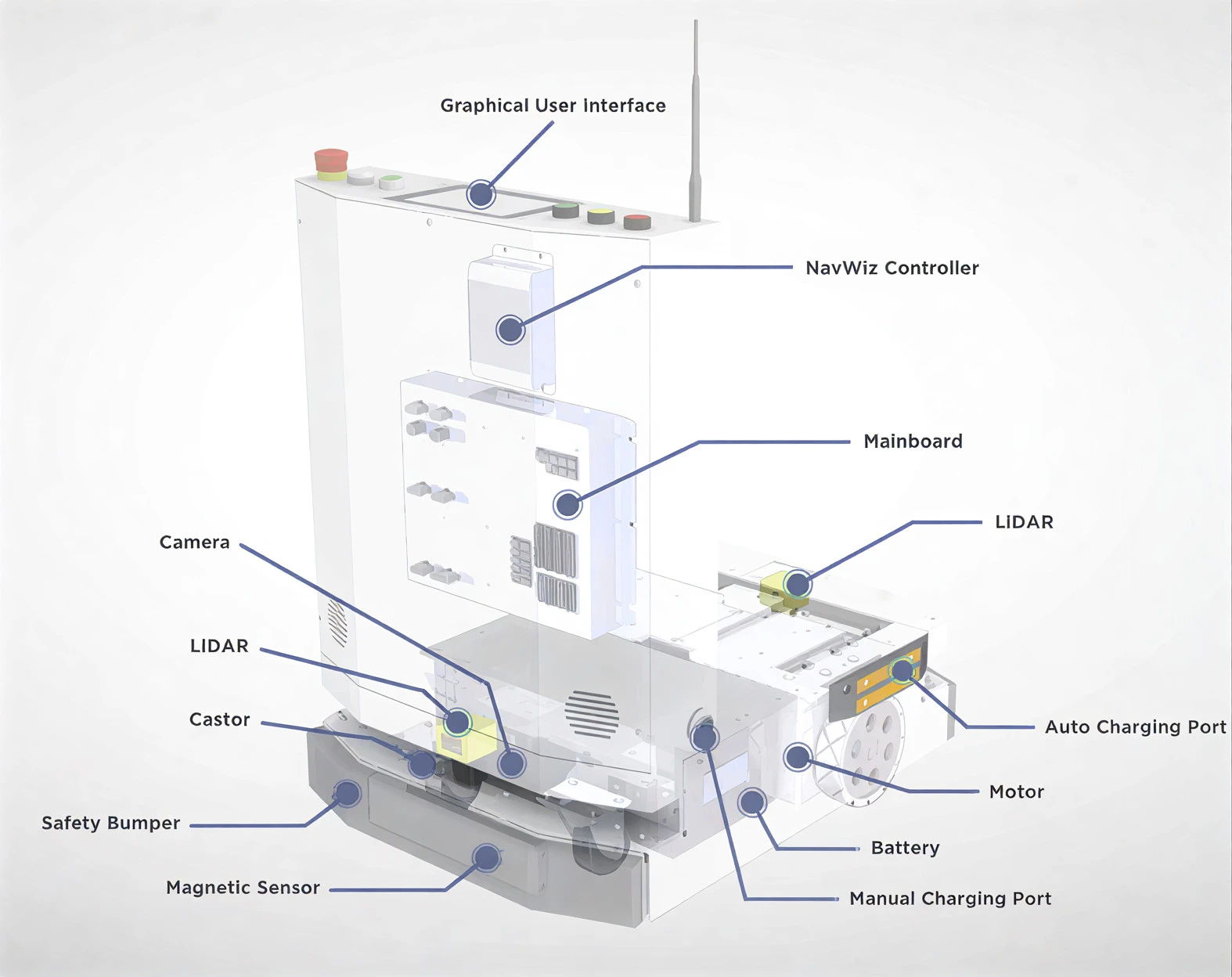
An Autonomous Mobile Robot (AMR) performs the same task, moving materials from point A to point B, but operates differently.
Instead of following a fixed route, AMRs:
AMRs use sensors such as LiDAR, cameras, and onboard computing to understand their surroundings. This makes them more flexible, especially in environments where people, forklifts, and equipment are constantly moving.
While AMRs are sometimes perceived as more expensive upfront, they can be more cost-effective over time due to faster deployment, reduced infrastructure changes, and greater adaptability.
The main difference between AGVs and AMRs is navigation.
Both can operate without human intervention once they are programmed. The difference is in how much flexibility your operation needs. If your layout is stable and predictable, an AGV may be the right choice. If your environment changes frequently or space is limited, an AMR may offer better long-term value.
Whether AGV or AMR, the hardware is only part of the system. Software plays a critical role in performance, safety, and scalability.
Both AGVs and AMRs rely on:
We focus on how these robots integrate into the broader automation environments, including material handling, production equipment, and manufacturing workflows. The right robot can deliver value when it’s properly integrated into the operation.
AGVs and AMRs both deliver strong ROI when applied correctly. The key is understanding how they fit into your operation today and how they’ll support growth in the future.
At SK Robotics, we work closely with customers to evaluate layout, material flow, safety requirements, and scalability before recommending a solution. Whether it’s AGV, AMR, or a combination of both, our focus is on delivering mobile automation that works reliably on the plant floor.
OUR EXPERT TEAMS WILL REACH
OUT TO YOU IN NO TIME