
As manufacturers and warehouse operators face increasing pressure to improve productivity, reduce labor shortages, and streamline operations, automation has become a critical investment. Mobile robotics, in particular, is transforming how materials move through facilities, helping businesses increase efficiency, improve safety, and support long-term growth.
Two of the most common automation technologies used for material handling are Autonomous Mobile Robots (AMRs) and Automated Guided Vehicles (AGVs). While both automate the transportation of materials, they differ significantly in how they navigate, adapt, and support operational requirements.
If you're evaluating automation solutions for your facility, understanding the differences between AMRs and AGVs is essential. This guide will help you compare both technologies and determine which solution best fits your manufacturing or warehouse environment.
AMRs (Autonomous Mobile Robots) use sensors, cameras, LiDAR, and artificial intelligence to navigate dynamically throughout a facility without requiring fixed routes. AGVs (Automated Guided Vehicles) follow predefined paths using guidance systems such as magnetic tape, wires, or markers.
In general:
The right choice depends on your facility layout, production processes, scalability requirements, and long-term automation goals.
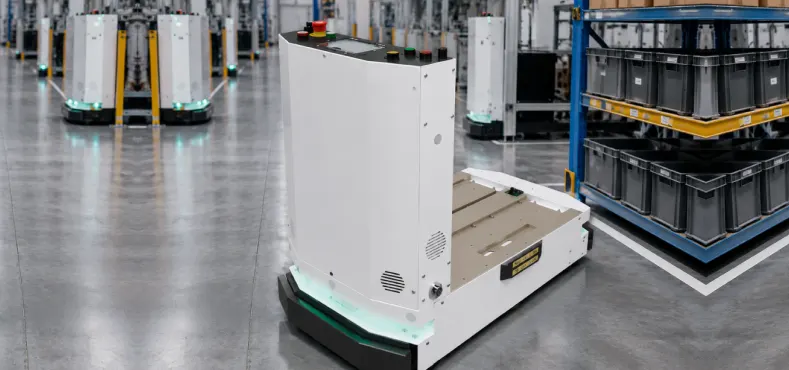
An Automated Guided Vehicle (AGV) is a robotic vehicle designed to transport materials along predetermined routes within a facility. AGVs have been used in manufacturing and logistics operations for decades and remain a reliable automation solution for repetitive material handling tasks.
AGVs navigate using predefined guidance systems such as:
These routes are programmed into the vehicle, allowing it to move materials between specific locations with high consistency and accuracy.
AGVs offer several benefits for industrial facilities:
Despite their reliability, AGVs have limitations:
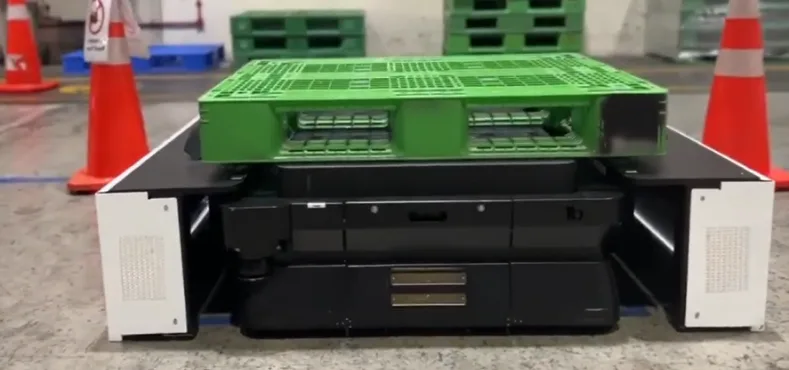
An Autonomous Mobile Robot (AMR) is a next-generation mobile robot capable of navigating independently through a facility. AMRs use advanced technologies to understand their surroundings and make real-time decisions about the best path to take.
AMRs rely on:
These technologies allow AMRs to create maps, avoid obstacles, and optimize routes without requiring predefined paths.
AMRs provide significant advantages in modern manufacturing environments:
AMRs also have some considerations:
| Feature | AGV | AMR |
|---|---|---|
| Navigation | Fixed Routes | Dynamic Navigation |
| Infrastructure | Requires Guidance Systems | Minimal Infrastructure |
| Flexibility | Low | High |
| Scalability | Moderate | Excellent |
| Obstacle Avoidance | Basic | Advanced |
| Deployment Time | Longer | Faster |
| Adaptability | Limited | High |
| Long-Term Efficiency | Moderate | High |
| Initial Cost | Lower | Lower |
AGVs excel in structured environments with predictable workflows, while AMRs offer greater flexibility and adaptability for facilities that continuously evolve.
Cost is often one of the most important factors when evaluating automation technologies.
AGVs generally have lower hardware costs but may require significant investment in infrastructure such as guide paths, magnetic strips, or navigation markers.
AMRs typically have higher upfront costs due to advanced sensors, software, and AIpowered navigation systems.
AGVs often require:
AMRs usually operate without extensive infrastructure changes, reducing installation expenses
Both technologies require maintenance, but AMRs often benefit from software-based updates and route modifications that can be implemented without physical changes.
While AGVs may have lower initial costs, AMRs often provide stronger long-term ROI due to:
AGVs remain highly effective in industries with repetitive workflows and stable production environments.
AGVs transport components, assemblies, and finished products throughout production lines with consistent precision.
Facilities use AGVs to move materials safely through standardized production processes.
AGVs are ideal for transporting large or heavy materials along predictable routes.
AGVs perform best when:
AMRs are rapidly becoming the preferred solution for facilities embracing Industry 4.0 and smart manufacturing initiatives.
AMRs support:
AMRs help transport high-value components through complex production environments where flexibility is essential.
Frequent product changes make AMRs ideal for electronics facilities requiring adaptable workflows.
AMRs perform best when:
Manufacturers must consider several factors before selecting an automation solution.
For many manufacturers, AMRs provide the adaptability needed to support future growth and evolving production demands.
Warehouse operations often require flexibility due to fluctuating inventory levels and customer demand.
AGVs are suitable for:
AMRs are ideal for:
As warehouses become more automated, AMRs are increasingly becoming the preferred solution due to their flexibility and scalability.
Safety is a top priority in any automation project.
Both AMRs and AGVs help reduce accidents associated with manual material handling and forklift traffic.
AMRs typically offer more advanced obstacle detection capabilities using sensors, cameras, and AI-based navigation.
AGVs generally stop when obstacles are detected but may not automatically reroute around them.
Both technologies support workplace safety initiatives and can help organizations meet safety standards while reducing operational risks.
The future of manufacturing automation is being driven by intelligent robotics and Industry 4.0 technologies.
Key trends include:
These innovations will continue to improve productivity, efficiency, and operational visibility across manufacturing and warehouse environments.
Choosing between AMRs and AGVs requires more than comparing technical specifications. Every facility has unique operational challenges, production goals, and growth strategies.
SK Robotics helps manufacturers identify, design, and implement automation solutions tailored to their specific requirements.
Our expertise includes:
From initial assessments to full-scale implementation, our team works closely with customers to deliver automation systems that improve efficiency, safety, and long-term profitability.
Whether you're considering AGVs, AMRs, or a hybrid automation strategy, SK Robotics can help you build a future-ready operation.
AMRs navigate autonomously using sensors and AI, while AGVs follow predefined routes.
Neither is universally better. The right choice depends on your operational requirements.
AGVs typically have lower upfront costs, while AMRs often provide greater long-term value.
AMRs generally offer more advanced obstacle detection and avoidance technologies.
Automotive, food processing, and heavy manufacturing industries commonly use AGVs.
SK Robotics provides automation consulting, robotics integration, engineering design, and material handling solutions tailored to your facility's needs.
Both AGVs and AMRs play an important role in modern manufacturing and warehouse automation. AGVs deliver reliable performance for repetitive, structured workflows, while AMRs provide the flexibility and intelligence required for dynamic environments.
The best automation solution depends on your facility layout, operational requirements, and long-term business goals.
If you're planning an automation project, partnering with an experienced automation provider can help ensure success. SK Robotics works with manufacturers across industries to design and implement automation solutions that improve productivity, enhance safety, and support sustainable growth.
Ready to determine whether AMRs or AGVs are the right fit for your facility? Contact SK Robotics today for a customized automation assessment.
OUR EXPERT TEAMS WILL REACH
OUT TO YOU IN NO TIME