
Let's do a deep dive on our , one of our Autonomous Mobile Robot (AMR) designed with features to enhance navigation, safety, and mobility. L300-3, an omnidirectional Automated Mobile Robot(AMR), a type of robotic system designed to navigate and operate with a high degree of flexibility and precision in various environments. Unlike traditional robots that move in linear directions, L300-3 can move in any direction without needing to change its orientation. This is made possible through specialized wheels, which allow for smooth and instantaneous directional changes, including forward, backward, sideways, and rotational movements.
L300-3 is particularly valuable in dynamic and complex environments where space is constrained, and quick adjustments are necessary. Omnidirectional AMRs are used in settings like warehouses, manufacturing facilities, and logistics centers, where they perform tasks such as transporting goods, aligning components, and picking and placing items with high accuracy.
The key advantage of omnidirectional AMRs is their exceptional maneuverability. They can navigate tight spaces, avoid obstacles, and adapt to changing surroundings with ease. This flexibility enhances operational efficiency by reducing the time needed for complex maneuvers and enabling more precise handling of tasks. However, this increased capability comes with added complexity in their mechanical design and control systems, which can make them more expensive and challenging to maintain compared to conventional differential- driven robots.
L300-3 also stands out with its unique combination of 360-degree safety Lidar coverage, making it a versatile and reliable solution for various industrial applications. Let’s take a deep dive into L300-3’s features.
To better understand the advantages of L300 (an omnidirectional AMR), let’s compare it with (a conventional differential AMR).
Table 1.0: Comparison between L300 and L300-3 AMR
| Type of AMR | Conventional Differential Driven | Omnidirectional Driven |
|---|---|---|
| Number of Motors | 2 motors | 4 motors |
| Type of Wheel | Standard wheel | Mecanum wheel |
| Size | Larger | More compact |
| Pathway Requirements | Bigger pathway | Smaller pathway |
| Task Completion Time | Longer time | Shorter time |
| Cost | Cheaper | Pricier |
| Safety | Standard | Better safety |
| Example Model | L300 | L300-3 |
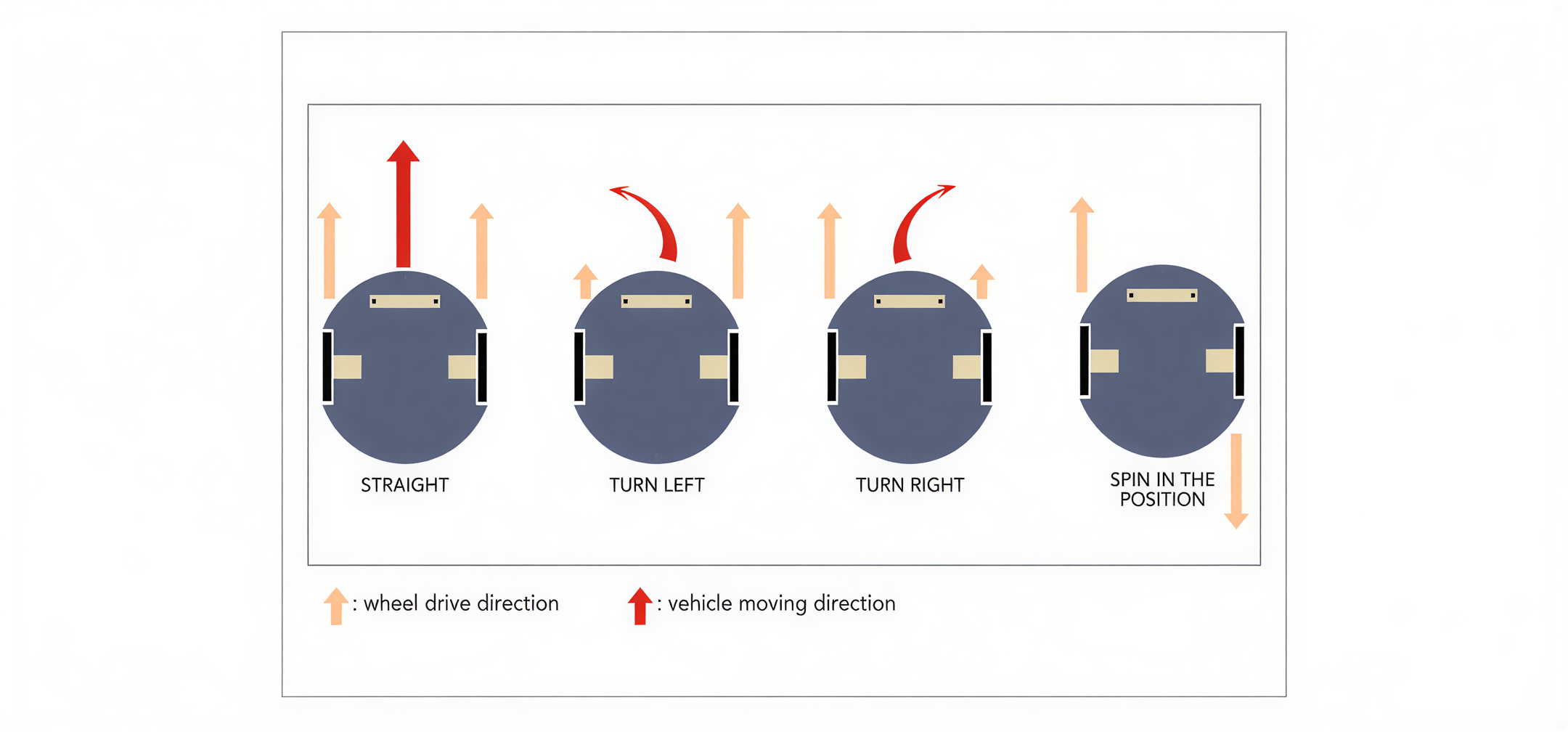
Table 1.0 shows the comparison of features between L300 AMR, which uses differential drive, and L300-3, which is an omnidirectional AMR. Most AMRs on the market, like L300, typically use two motors in a differential drive system. Differential-driven AMRs, such as L300, often take longer to complete tasks and require larger pathways to navigate. Figure 1 shows the movement of a conventional differential driven AMR. The AMR moves forward when both motors rotate in the same direction. It turns slightly left or right when there is a speed difference between the two motors. The AMR will rotate 360 degrees when both motors rotate in opposite directions at the same speed.
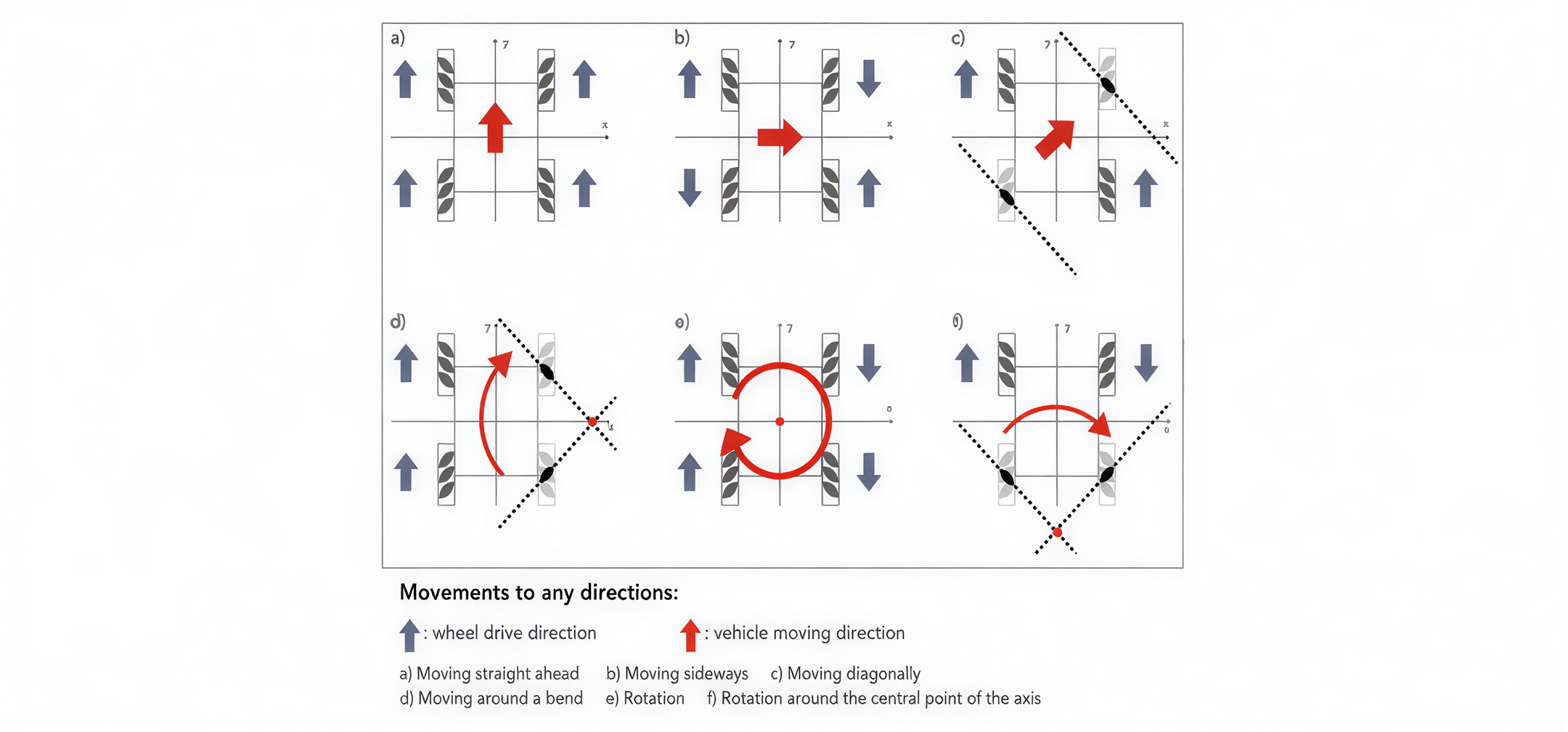
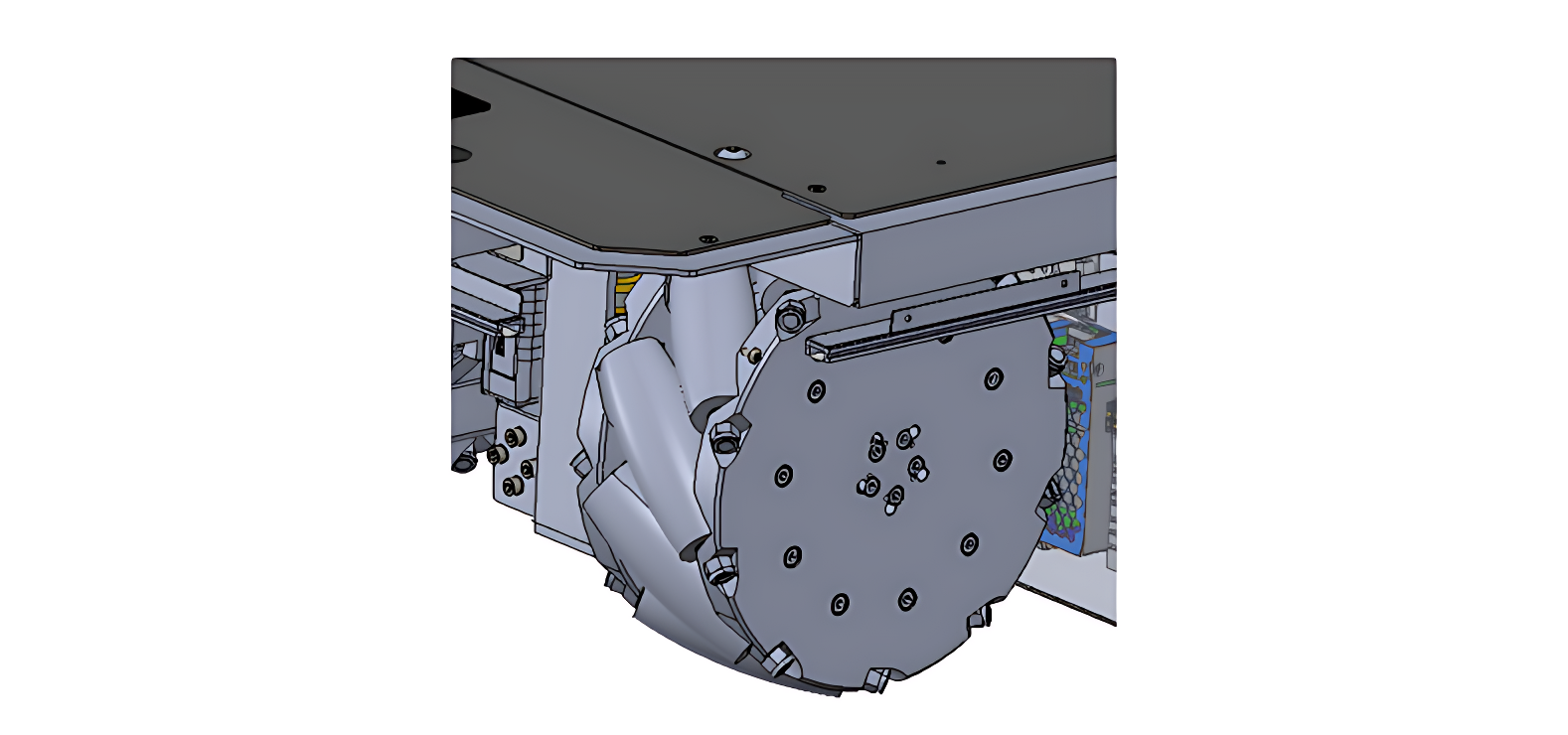
On the other hand, the L300-3‘s mobility is enhanced by 4x wheels connected to 4x Servo motors, allowing omnidirectional movement. The speed differences among all four wheels determine the movement direction, providing exceptional flexibility. The L300-3 is developed based on Mecanum wheel technology, a significant innovation in robotics. A Mecanum wheel design consists of a series of rubberized external rollers arranged at a 45-degree angle to the wheel plane. This unique design allows the wheel to move in any direction, including sideways, by varying the speed and direction of each wheel. By adjusting the speed and direction of each wheel, L300-3 can move forward, backward, sideways, and diagonally, making it highly versatile and efficient in navigating tight spaces. Figure 2 shows the omnidirectional movement with 4 actuators attached to the Mecanum wheel. Omnidirectional drive AMRs like L300-3 offer several advantages. They have better safety, can operate in smaller pathways, and complete tasks faster. However, this type of AMR is slightly more expensive due to its advanced capabilities and complex design. Figure 3 shows the Mecanum wheel of the L300-3 AMR.
The L300-3 is also equipped with 360 Safety Lidar Coverage, providing comprehensive protection and precise navigation capabilities. This system utilizes multiple Lidar sensors strategically placed to cover the entire circumference of the AMR, ensuring that it can detect obstacles and navigate safely in any direction. The 360 Safety Lidar Coverage provides several key advantages:
The L300-3 represents a significant advancement in autonomous mobile robots, where it can move freely in any direction while combining 360-degree safety Lidar coverage. This innovative technology ensures safe, accurate, and omnidirectional movement, making it an ideal solution for a wide range of industrial applications. With the L300-3, you can achieve higher efficiency, improved safety, and integration into your operations.
OUR EXPERT TEAMS WILL REACH
OUT TO YOU IN NO TIME