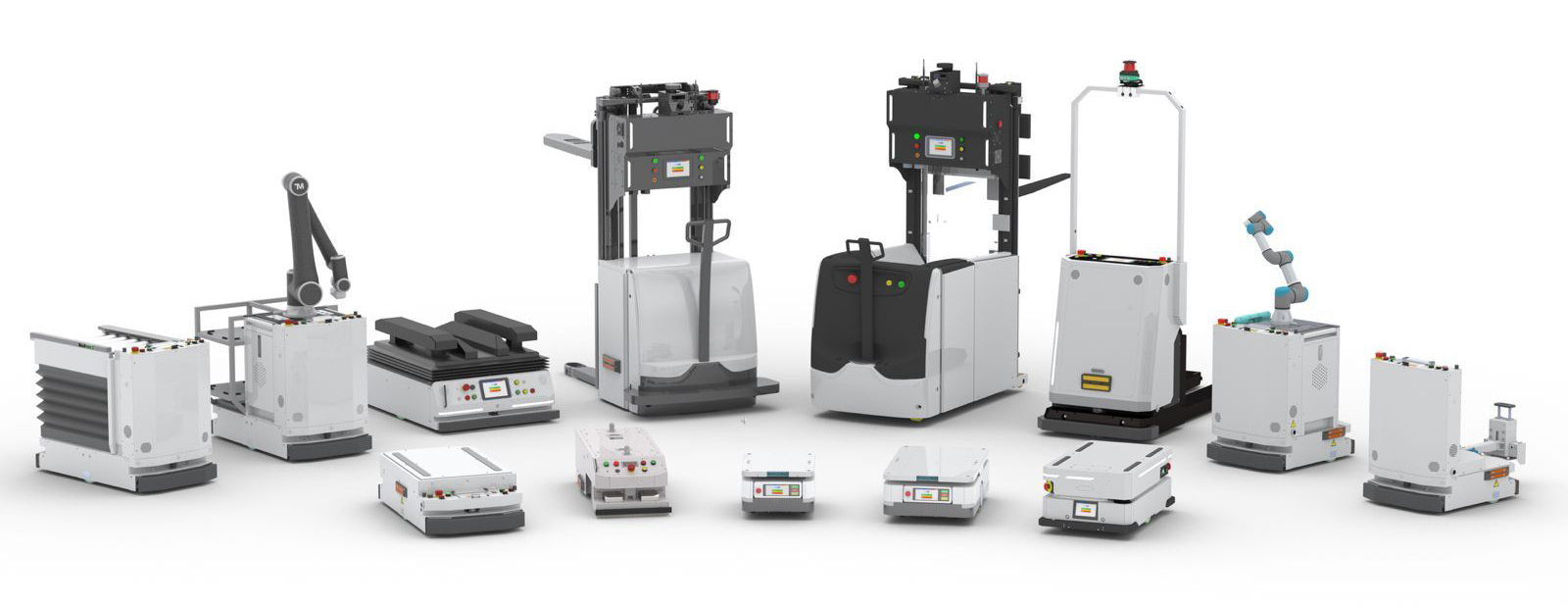
Automation has become a main part of today’s industrial industry. From automotive and electronics to healthcare, hospitality, and logistics, industries are embracing autonomous technologies to maximize efficiency, safety and productivity. At the center of this transformation are Automated Guided Vehicles (AGVs) and Autonomous Mobile Robots (AMRs), two solutions often compared, yet uniquely powerful in their own ways.
At SK Robotics, we continue to innovate in this space, designing mobile robots that meet the needs of manufacturers and facilities worldwide. This blog breaks down AGV and AMR technologies, their advantages, and their real-world applications across industries.
AGVs (Automated Guided Vehicles) navigate by following predefined paths, commonly using:
Magnetic-track AGVs follow physical strips placed on the floor, while trackless AGVs use scanners like LiDAR to detect their surroundings and move without fixed routes. Both are flexible and often require minimal changes to facility layouts.
AMRs (Autonomous Mobile Robots) represent the evolution of AGVs. Unlike AGVs that follow fixed routes, AMRs navigate using a combination of:
These sensors allow AMRs to understand their environment, map their surroundings, and make intelligent decisions, similar to how humans perceive and move through space. This gives them unmatched flexibility compared to fixed-route AGVs.
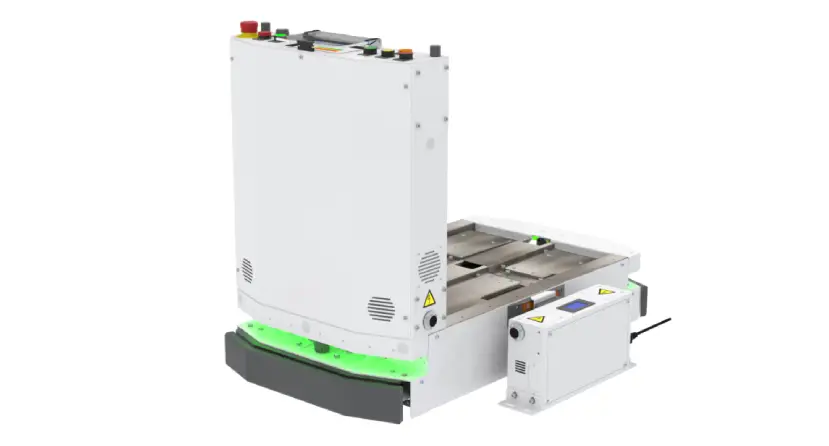
AMRs don’t fatigue and maintain consistent accuracy using advanced algorithms, ideal for high-volume facilities.
AMRs reduce manual lifting, help avoid workplace injuries, and take on hazardous tasks like moving materials in high-risk areas.
By reducing the need for manual material handling, companies can reduce labor costs and minimize product damage.
AMRs do not require installation of magnetic tracks or major layout changes. Routes can be updated digitally in minutes.
The robot’s sensors and software provide valuable data for continuous improvement and operational insights.
Although AMRs may require a significant upfront investment, most facilities see strong long-term ROI.
Some AMR types, particularly magnetic-tape hybrids, may require dedicated tracks or have movement limitations depending on configuration.
SK Robotics provides customization options to ensure each robot fits the customer’s workflow and facility layout.
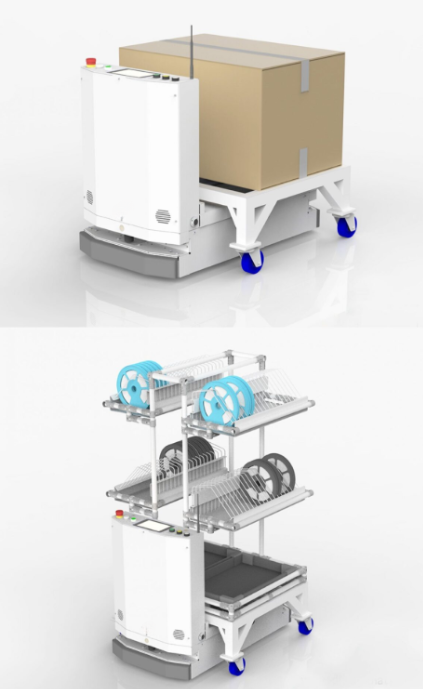
AMRs transport goods, pick items, sort parcels, and automate repetitive travel tasks, freeing employees for higher-value work.
Robots support material movement, cleaning, disinfection, and process automation. Their autonomous navigation is especially beneficial in complex facilities with dynamic obstacles.
Hotels and restaurants deploy AMRs to deliver food, goods, and supplies while improving workflow efficiency and customer experience.
AMRs equipped with cameras, sensors, and remote monitoring systems perform routine patrols, detect anomalies, and provide thermal or low-light imaging.
Robots transport meals, linen, medication, supplies, and waste, reducing cross-contamination risks and allowing staff to focus on patient care.
AMRs handle repetitive sampling and transportation tasks, supporting highly regulated processes and improving traceability.
Both AGVs and AMRs offer significant operational value. The decision often comes down to:
The world of autonomous robotics is rapidly evolving. Advancements in AI, machine learning, sensor fusion, and cognitive architecture are accelerating the capabilities of mobile robots. In the years ahead, AMRs will continue expanding into new industries, including:
At SK Robotics, we are committed to shaping the future with engineering mobile robots that enhance safety, streamline operations, and revolutionize how industries move materials.
OUR EXPERT TEAMS WILL REACH
OUT TO YOU IN NO TIME