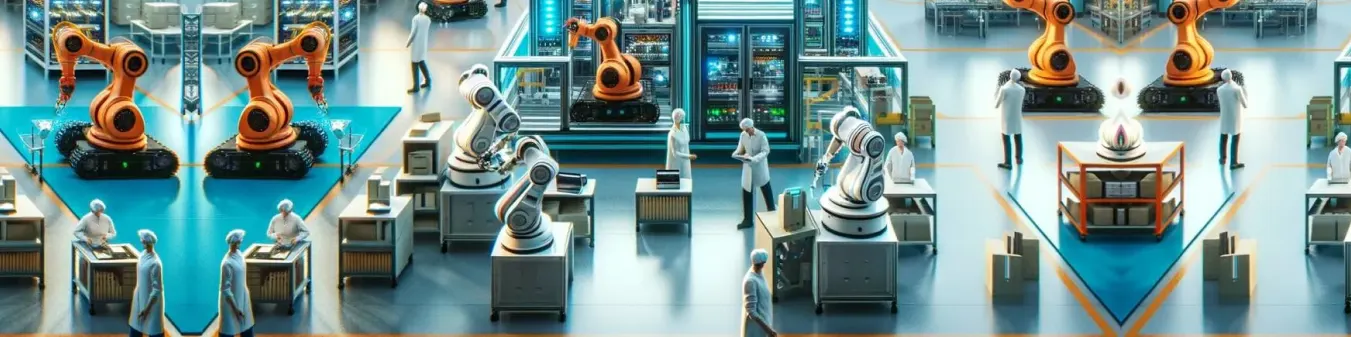
Automation is no longer defined by a single piece of equipment. And if you're still evaluating solutions that way, you might already be behind.
The pressure is real: Deloitte projects 2.1 million manufacturing jobs will go unfilled by 2030. The question isn't whether to automate anymore - it's how.
Walk into any automation trade show and you'll find no shortage of AMRs, cobots, and vision systems. Everyone has access to the same technology.
So what actually separates the winners from the rest?
How those technologies work together.
At SK Robotics, we look at the full picture - how materials move, where processes connect, and where inefficiencies quietly compound. From there, we design systems that bring the right technologies together to solve the problem as a whole, not just patch part of it.
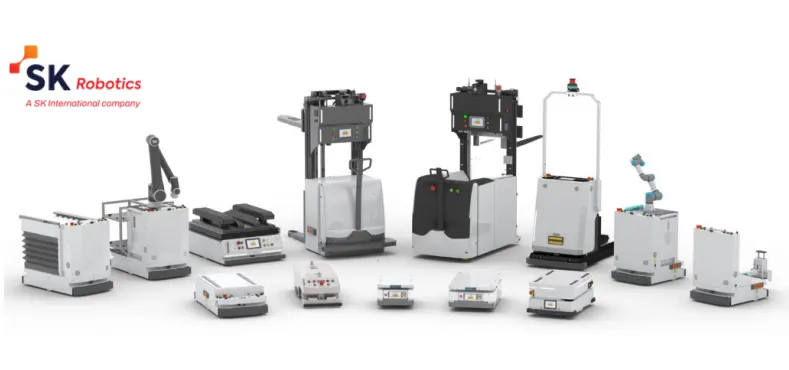
An AMR deployed in isolation is just a robot moving boxes. The value comes from how it integrates into the broader operation. When deployed correctly, AMRs become part of a connected system, integrated into existing layouts, aligned with production flow, and built to scale as operations evolve.
The same logic applies to cobots. They bring flexibility and repeatability to tasks that benefit from consistent execution. But the right cobot in the wrong place just creates a new bottleneck. It's all about fit.
Here's a question most automation providers don't ask: what if one solution could both move materials and perform tasks across multiple stations in your process?
That's the premise behind SK Robotics' ARV: An Automated Robotic Vehicle that combines the mobility of an AMR with the task functionality of a cobot into a single, unified system. Instead of coordinating separate platforms, one ARV handles transport and execution across the line.
This matters as more facilities move away from fixed, linear workflows toward flexible systems that serve multiple processes dynamically. The ARV is built for exactly that environment.
Hardware is visible. Software is what makes it work.
Orchestrating workflows, managing fleet coordination, connecting to existing systems - these are the layers that turn a collection of robots into a coherent operation. Vision systems add another dimension: allowing robots to navigate dynamic environments without fixed infrastructure, reducing setup costs and enabling faster redeployment.
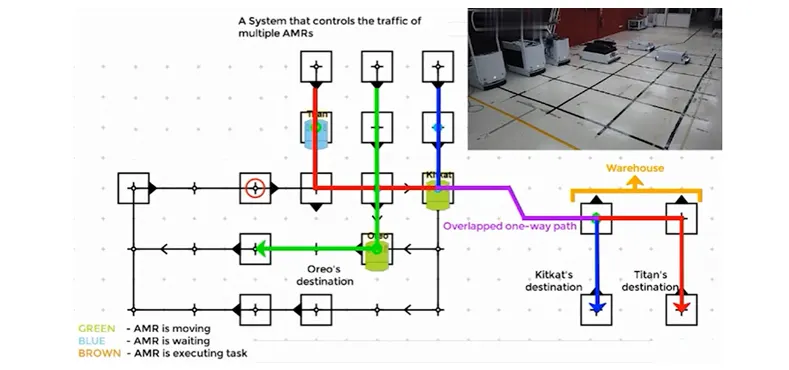
Deploying automation without an integration strategy just adds complexity.
What makes SK Robotics competitive isn't any single product, it's the ability to look at an operation end-to-end, design a system where every component pulls in the same direction, and build something that performs in the real world, not just on a demo floor.
That's the difference between automation as a purchase and automation as a solution.
Interested in what an integrated approach could look like for your operation? Let's talk.OUR EXPERT TEAMS WILL REACH
OUT TO YOU IN NO TIME